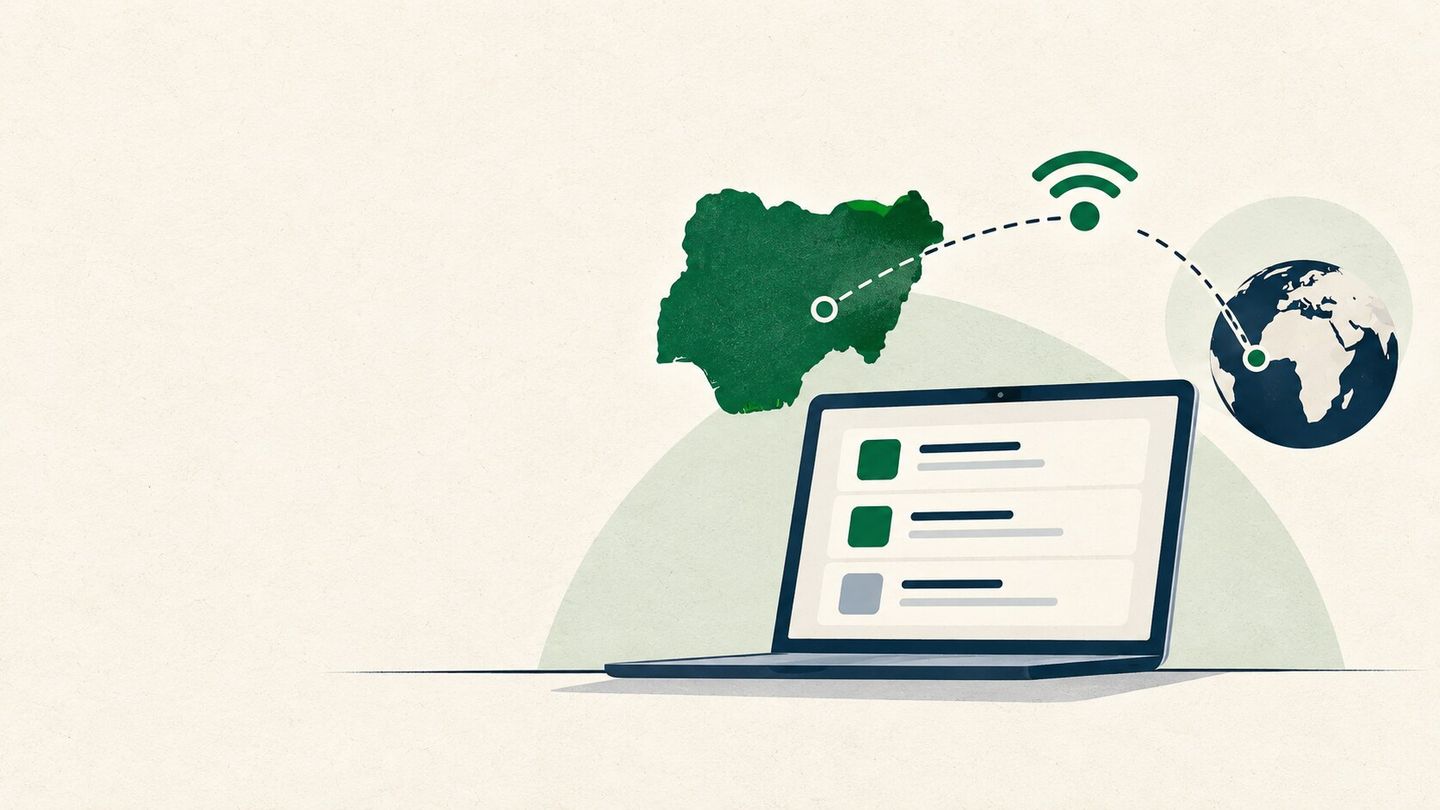
Remote jobs in Nigeria exist across technology, sales, customer support, design, marketing and other fields, but “remote” does not always mean “work from any country.” A vacancy may require you to live in Nigeria, overlap a particular time zone, have reliable connectivity or be legally eligible for a foreign employer’s hiring arrangement.
Sources reviewed on 12 October 2026. Live vacancies change daily.
How common are fully remote openings?
MyJobMag’s 2026 Job Search Report says about 2% of jobs on its platform in 2025 were fully remote, nearly double its 2024 share. That describes MyJobMag listings, not every job in Nigeria. Hybrid roles are a different category: they still require some time at a workplace.
Where to look
Start with job boards that let you filter by work arrangement. Jobberman’s remote-jobs page lists remote vacancies and categories; the results change, so verify each posting’s date and employer. LinkedIn Help documents a remote filter in job search. Search the employer’s own careers page before applying, especially when a listing is reposted elsewhere.
Use specific terms: “remote customer support Nigeria,” “remote product designer Africa” or “Nigeria eligible software engineer.” Read the location, time-zone and employment-type fields. A posting labelled “remote US” may still require US residence and work authorisation.
What to put in a remote-job application
Show proof that you can perform the role, not just that you want to work from home. Describe relevant tools, written communication, independent delivery and examples of work completed across locations or teams. A portfolio, project, customer-support sample or case study can make your evidence concrete. Tailor your CV to the job description and state your location honestly.
Check the offer and avoid scams
Confirm the employer’s legal name and website, the recruiter’s email domain, interview process, payment terms and the equipment policy. Do not pay an application, training or equipment fee to receive a job. The US Federal Trade Commission’s 2026 warning describes fake remote-job messages and payment requests; the warning signs are relevant wherever the applicant lives.
Be cautious when an offer arrives through an unsolicited message with no interview, promises unusually high pay for vague tasks, or asks you to move money for someone else. Do not share bank credentials, one-time codes, NIN or BVN in an application.
A practical weekly routine
Choose two or three target roles, save relevant searches, check new listings regularly and record where you applied. Spend more time on applications that match your skills and location than on mass-submitting a generic CV. Revisit your search terms and portfolio when the applications are not producing interviews.
Remote work can widen your options, but it remains competitive. Clear evidence, eligibility and employer verification matter more than the word “remote” in a job title.