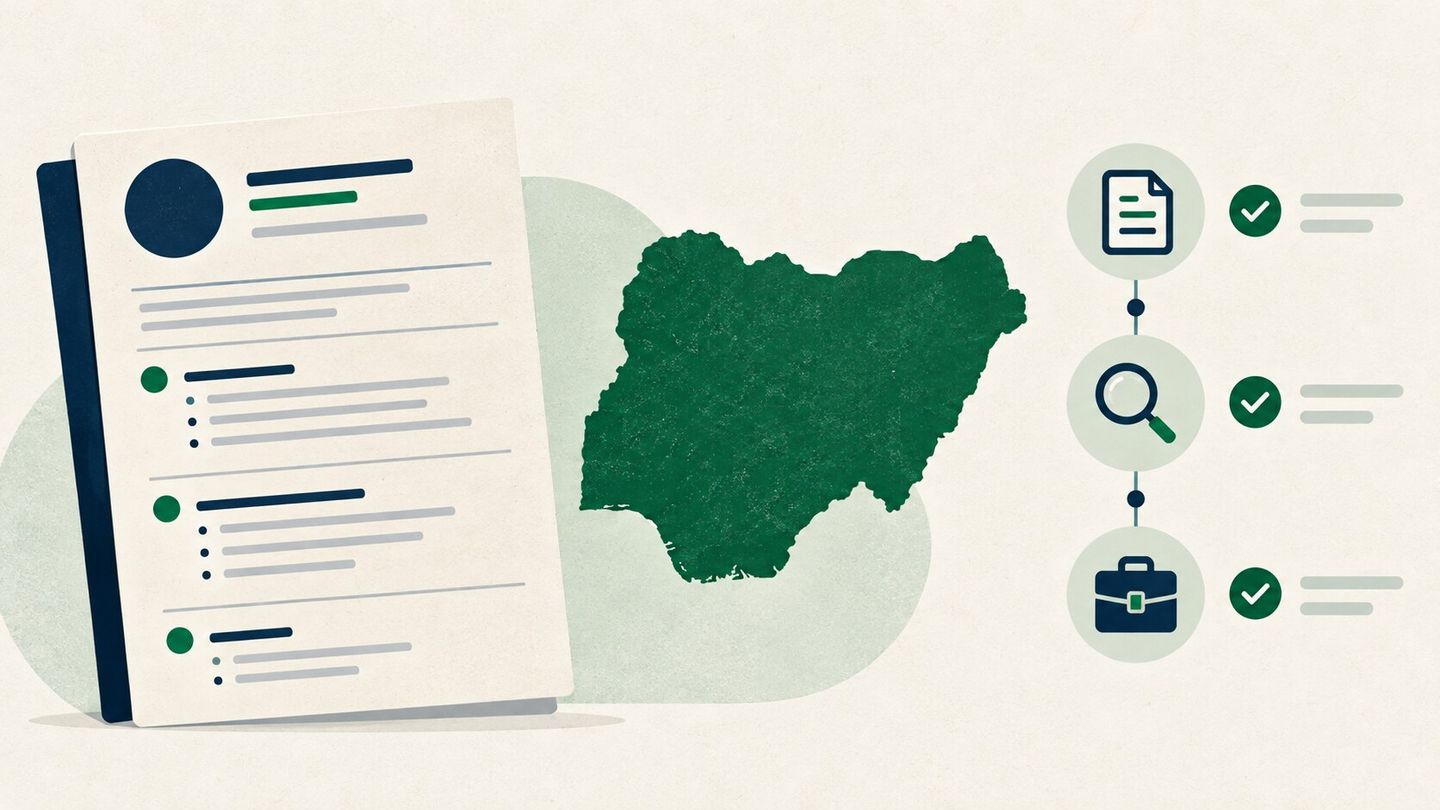
Creating a CV in Nigeria starts with evidence, not decoration. Gather your correct dates, job titles, qualifications, projects and results before you choose a template. The aim is to help a recruiter see your fit quickly and verify your claims.
1. Read the vacancy first
Underline the required skills, experience, location and application instructions. A graduate trainee advert and a senior accountant advert need different evidence. If the employer requests a specific file format or a cover letter, follow that instruction.
2. Put contact details at the top
Use your full name, one active phone number, a professional email and a city or state such as Ibadan, Oyo State. Add a portfolio or LinkedIn link when it is relevant. A full street address is usually unnecessary for an initial application. Never put NIN, BVN or bank details on the CV.
3. Write a short, specific summary
In two to four lines, state your role or target role, strongest relevant skills and evidence. For example: “Customer support specialist with three years of experience handling email and chat enquiries. Built a reusable response library that reduced repeat questions across a 10-person team.” Use this pattern only if it accurately describes your work.
4. Show experience in reverse date order
For each role, give the job title, organisation, location and dates. Follow with a few bullets showing your actions and results. For a graduate, internships, NYSC assignments, volunteer work and substantial projects can demonstrate skills; label them honestly. Do not present a class project as paid employment.
Both Jobberman Nigeria and Europass recommend clear, relevant information with the most recent experience first. A simple layout makes dates and achievements easier to scan.
5. Add education and skills that matter
List your qualification, institution and completion year. Include a certification only if you earned it, and use its exact name. For skills, prefer tools and tasks you can demonstrate: Excel pivot tables, bookkeeping, React, customer complaint resolution or equipment maintenance. Avoid a long list of unproved adjectives.
6. Choose a readable template and file
Use clear section headings, consistent date formats and enough space between sections. Avoid shrinking the font to fit irrelevant material. Save the file type the employer asks for. Open the exported file and check page breaks, links and spelling. For online applications, a text-based PDF or ordinary DOCX is more useful than a scanned image of a CV.
7. Tailor and check every application
Move the strongest relevant evidence higher, adjust the summary and verify the employer name in any cover letter. Keep a master CV so tailoring does not erase your full record. Ask a trusted person to review the document, then read it yourself one final time.
There is no single mandatory Nigerian CV format. Jobberman notes that strong CVs vary by career stage, while all need clarity and relevance. You can build a CV and use our CV example as a structural reference, replacing every sample detail with your own facts.